
Showing posts with label celebrity death. Show all posts
Showing posts with label celebrity death. Show all posts
Sunday, February 28, 2010
Comedian Lenny Bruce Overdosed on the Toilet
This summary is not available. Please
click here to view the post.


Friday, February 26, 2010
Comedian John Belushi's Chateau Overdose


John Belushi was born in Chicago, Illinois, the son of Agnes Belushi (née Samaras), a cashier and first-generation Albanian-American, and Adam Belushi (b. 1919), an Albanian immigrant and restaurant operator who left his native village, Qytezë, in 1934 at the age of sixteen.[2][3][4][5] The family's name at the time of immigration was Bellios, or Belliors.[5] Belushi was raised in the Albanian Orthodox church[6] and grew up outside Chicago in Wheaton with a brother Jim, five-and-a-half years his junior. He attended Wheaton Central High School, where he met his future wife, Judy Jacklin, and was a middle linebacker for the school's football team. He attended the University of Wisconsin–Whitewater and the College of DuPage near Chicago.

Career
Belushi's first big break as a comedian occurred in 1971, when he joined The Second City comedy troupe in Chicago. Thanks to a caricature of singer Joe Cocker's intense and jerky stage presence, he was cast in National Lampoon's Lemmings, a parody of Woodstock, which played Off-Broadway in 1972 and also showcased future Saturday Night Live (SNL) performers Chevy Chase and Christopher Guest.
From 1973 to 1975, National Lampoon Inc. aired The National Lampoon Radio Hour, a half-hour comedy program syndicated across the country on approximately 600 stations. When original director Michael O'Donoghue quit in 1974, Belushi took over the reins until the show was canceled. Other players on the show included future SNL regulars Gilda Radner, Bill Murray, Brian Doyle-Murray and Chevy Chase. Belushi married Judy Jacklin (Judy Pisano), an associate producer of The Radio Hour. A number of comic segments first performed on The Radio Hour would be translated into SNL sketches in the show's early seasons.
1975-1979
Belushi achieved national fame for his work on Saturday Night Live, which he joined as an original cast member in 1975. Between seasons of the show, he made one of his best-known movies, Animal House. As several Belushi biographies have noted, on John's 30th birthday (in 1979), he had the number one film in the U.S. (Animal House), the number one album in the U.S. (The Blues Brothers: Briefcase Full of Blues) and Saturday Night Live was the highest-rated late night television program. In the toga party scene in the basement of the fraternity house in Animal House, the uncredited coed dancing with Bluto (Belushi) is his wife. While filming Animal House, Belushi made an appearance at Ithaca College in 1976. When introduced, he came onstage with a chainsaw and cut up the podium.
When interviewed for retrospectives on John Belushi, Dan Aykroyd told stories of John often finishing SNL rehearsals, shows or film shoots and, exhausted, simply walking unannounced into nearby homes of friends or strangers, scrounging around for food and often falling asleep, unable to be located for the following day's work. This was the impetus for the SNL horror-spoof sketch "The Thing That Wouldn't Leave," in which Belushi torments a couple (played by Jane Curtin and Bill Murray) in their home looking for snacks, newspapers and magazines to read, and taking control of their television. SNL also featured a short film by writer Tom Schiller called "Don't Look Back In Anger," where Belushi playing himself as an old man, visits the graves of his now-former cast-members, the last to survive. Ironically, Belushi was the first SNL cast member to die.
Belushi left Saturday Night Live in 1979 to pursue a film career. Belushi would make four more movies; three of them, 1941, Neighbors, and most notably The Blues Brothers were made with fellow SNL alumnus Dan Aykroyd.

Dan Aykroyd wrote the roles of Dr. Peter Venkman in Ghostbusters and Emmett Fitz-Hume in Spies Like Us with Belushi in mind, and the roles were actually played by Belushi's former SNL castmates Bill Murray and Chevy Chase, respectively. Aykroyd used to joke that the green ghost Slimer in Ghostbusters was "the ghost of John Belushi", given that he had a similar party animal personality.
Released in September 1981, the romantic comedy Continental Divide starred Belushi as Chicago home town hero writer Ernie Souchack who gets put on assignment researching a scientist studying birds of prey in the remote rocky mountains. Belushi's character "Ernie Souchak" was loosely based on popular, now deceased Chicago columnist Mike Royko.
At the time of his death, Belushi was pursuing several movie projects, including Noble Rot, an adaptation of a script by former The Mary Tyler Moore Show writer/producer Jay Sandrich entitled Sweet Deception; noble rot is a benevolent fungus that can infect wine grapes on the vine, helping to produce high quality sweet wines. Belushi was rewriting the script with former Saturday Night Live colleague Don Novello.

The "College" sweatshirt Belushi wore in National Lampoon's Animal House was purchased in Carbondale, Illinois, when his brother, Jim, was a student at Southern Illinois University Carbondale.[7]
According to writer/actor Tim Kazurinsky in the book Live From New York, mentor and close friend Belushi was instrumental in getting fellow Second City alumnus Kazurinsky onto Saturday Night Live in 1981. But during his run on the show, Kazurinsky became very stressed out by its demands. He later called Belushi and said that he needed a ride to the airport because he was quitting and moving back to Chicago. Belushi and his wife picked him up but refused to bring him to the airport, at which Belushi told Kazurinsky that the show's atmosphere can get bad, but that he still had access to major broadcasting airwaves. Instead, Belushi took the performer to a psychiatrist whom he saw for a year, while staying with the show during his run.
It was Belushi who recruited the band Fear and brought them to Cherokee Studios to record songs for the soundtrack of Neighbors, a film he and Aykroyd were starring in. Music producing partners Steve Cropper and Bruce Robb remember recording the music, but nobody knows exactly what happened with the final soundtrack, which was ultimately replaced in the film by a traditional movie score. Cherokee Studios was a regular haunt for the original Blues Brothers back in the early days of the band. John Belushi and Dan Aykroyd became fixtures at the recording studio, while fellow Blues Brother and guitar player Steve Cropper called Cherokee his producing home. Whenever they needed a bass player, they were joined by another Blues Brother, Donald "Duck" Dunn. During this time, Cropper along with producing partner and Cherokee owner Bruce Robb worked on a number of music projects with the two comedian/musicians, the band Fear and later Aykroyd's movie "Dragnet." "What can I say? John was excessively talented, and I guess you could say he sort of lived life 'excessively.' I think what happened to John had a sobering effect on a lot of people, me included," said music producer Bruce Robb.
Belushi was generous to his friends and family, often lending them money when they asked. He bought his father a ranch near San Diego, and helped set up his old friends in Chicago with their own businesses. He helped his brother Jim find a spot at Second City, where he himself acted in the early days of his career. His generous side also showed during his time in the Blues Brothers; he often played songs by blues artists he thought could use the money from the royalties.
 Death
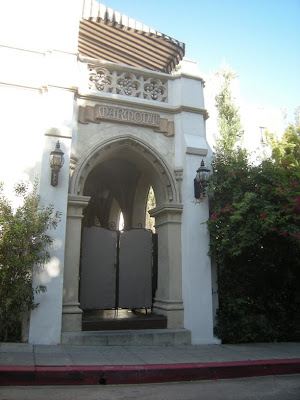
On March 5, 1982, Belushi was found dead in his room at Bungalow #3 of the Chateau Marmont on Sunset Boulevard in Los Angeles, California.[8] The cause of death was a speedball, a combined injection of cocaine and heroin. On the night of his death, he was visited separately by friends Robin Williams (at the height of his own drug exploits)[9] and Robert De Niro,[10] each of whom left the premises, leaving Belushi in the company of assorted others, including Cathy Smith. His death was investigated by forensic pathologist Dr. Ryan Norris among others, and while the findings were disputed, it was officially ruled a drug-related accident.
 Two months later, Smith admitted in an interview with the National Enquirer that she had been with Belushi the night of his death and had given him the fatal speedball shot. After the appearance of the article "I Killed Belushi" in the Enquirer edition of June 29, 1982, the case was reopened. Smith was extradited from Toronto, arrested and charged with first-degree murder. A plea bargain arrangement reduced the charges to involuntary manslaughter, and she served 15 months in prison[11].
In one of Belushi's last TV appearances, he filmed a cameo for the comedy series Police Squad!. At the suggestion of the show's producer, Robert K. Weiss, Belushi was filmed, face down in a swimming pool, dead. The footage was part of a running gag where the episode's guest-star would not survive past the opening credit sequence without meeting some gruesome end. Also, as noted in one of the commentary tracks on the DVD, John nearly drowned during the filming of the scene. The scene never aired.
Belushi and his friend Dan Aykroyd were slated to present the Academy Award for Best Visual Effects at the 54th Academy Awards, an event held less than four weeks after his death. Aykroyd presented the award alone, commenting on the stage "My partner would have loved to have been here to present this award, given that he was something of a visual effect himself."
Belushi is interred in Abel's Hill Cemetery on Martha's Vineyard Chilmark, Massachusetts. His tombstone reads "I may be gone, but Rock and Roll lives on." His gravestone is not above his body. It was moved after operators of the cemetery had found many signs of vandalism and rowdiness where his body lies. He also has a cenotaph at Elmwood Cemetery in River Grove, Illinois.

John Belushi's life is detailed in the 1985 biography Wired: The Short Life and Fast Times of John Belushi by Bob Woodward. Many friends and relatives of Belushi, including his wife Judy, Dan Aykroyd and Jim Belushi, agreed to be interviewed at length for the book, but later felt the final product was exploitative and not representative of the John Belushi they knew. The book was later adapted into a feature film in which Belushi was played by Michael Chiklis. Belushi's friends and family boycotted the film, which proved to be critical and caused the movie to be a box-office flop.
Belushi was portrayed by actors Eric Siegel in Gilda Radner: It's Always Something, Tyler Labine in Behind the Camera: The Unauthorized Story of Mork & Mindy (which also features his friendship with Robin Williams), and Michael Chiklis in Wired.
His widow later remarried and is now Judith Belushi Pisano. Her biography (with co-biographer Tanner Colby) of John, Belushi: A Biography is a collection of first-person interviews and photographs, and was published in 2005.
On April 1, 2004, 22 years after his death, Belushi was honored with a star on the Hollywood Walk of Fame, after a ten-year lobby by James Belushi and Judith Belushi Pisano. Among those present at the ceremony were Dan Aykroyd, Chevy Chase, Ted Danson, Mary Steenburgen, and Tom Arnold.
In 2006, Biography Channel aired the "John Belushi" episode of Final 24, a documentary following Belushi in the last 24 hours leading to his death.
Filmography
Tarzoon: Shame of the Jungle (1975) (voice) (1979 American dubbed version)
Animal House (1978)
The Rutles: All You Need Is Cash (1978)
Goin' South (1978)
Old Boyfriends (1979)
1941 (1979)
The Blues Brothers (1980)
Continental Divide (1981)
Neighbors (1981)
SNL characters and impersonations
Recurring characters
Samurai Futaba
Captain Ned, one of Miles Cowperthwaite's cronies
Jacob Papageorge alias 'Joliet' Jake Blues, from the Blues Brothers
Jeff Widette, from the Widettes
Kevin (from The Mall sketches)
Kuldorth (from The Coneheads)
Larry Farber (one half of the Farber couple [the wife, Bobbi, was played by Gilda Radner])
Lowell Brock, from the H&L Brock commercials
Matt Cooper, from the Land Shark sketches
Pete, from the Olympia Cafe
Steve Beshekas (who was in real life a good friend of Belushi's since community college)
Frank Leary, one of St. Mickey's Knights of Columbus
Celebrity impersonations
Al Hirt
Babe Ruth
Bert Lance
Cesar Romero
Dino De Laurentiis
Ed Ames
Ed Asner
Elizabeth Taylor
Elvis Presley
Franklin D. Roosevelt
Fred Silverman
George Wallace
Henry Kissinger
Hermann Göring
Jack Kerouac
Jawaharlal Nehru
Jimmy Hoffa
Joe Cocker
John Lennon
Julia Child
Leonid Brezhnev
Ludwig van Beethoven
Marlon Brando
Menachim Begin
Richard Daley
Robert Blake
Roy Orbison
Sam Peckinpah
Sanjay Gandhi
Steve Rubell
Sun Myung Moon
Tip O'Neill
Truman Capote
Vasiliy Alekseyev
William Shatner
Woody Hayes
Yasser Arafat
 References
1.^ It’s The Artie Talkin’ - DIMP interviews Artie Lange from dvdinmypants.com
2.^ Belushi's SNL Bio from NBC.com
3.^ John Belushi Biography (1949-1982) from filmreference.com
4.^ Books Of The Times; Close-Up Of John Belushi from the New York Times
5.^ They Were Belushis (or Blues Brothers) from genealogywise.com
6.^ The religion of John Belushi, actor, comedian from adherents.com
7.^ The party's over: Some say SIUC has finally shed rowdy school image, a May 8, 2006 article from The Southern Illinoisan
8.^ "John Belushi, Manic Comic of TV and Films Dies.". New York Times. "John Belushi, the manic, rotund comedian whose outrageous antics and spastic impersonations on the Saturday Night Live television show propelled him to stardom in the 1970's, was found dead yesterday in a rented bungalow in Hollywood, where he had launched a film career in recent years. The 33-year-old actor ..."
9.^ Robin Williams, television biography from the Biography Channel, 7/7/06.
10.^ John Belushi Dies at the Chateau Marmont from franksreelreviews.com
11.^ Figure in John Belushi Case Freed From California Prison - New York Times
-- wiki

If you stop by the Chateau Marmont, don't expect to be able to visit the scene of Belushi's demise - unless you plan on staying the night. Belushi was riding a crest of popularity in 1982, and had more than enough money to hole up in one of the hotel's exclusive bungalows, which are accessible only to guests holding room keys.
But if you slip around behind the hotel and walk the sidewalk along Monteel Road, you can peer down into the area of the tree-shaded bungalows. Belushi's last binge occurred either in Bungalow 3 or Bungalow 2 - there seems to be an equal number of contentions for each locale.
-- The Dark Side of Hollywood - LA Daily News


Wednesday, February 24, 2010
Bounty Hunter Domino Harvey's West Hollywood Overdose

"Everybody wants to go to heaven,
but nobody wants to die."
-- Domino Harvey
Domino Harvey (August 7, 1969 – June 27, 2005) was an English bounty hunter, notable within that field for being female and from a privileged background. Though there is speculation as to whether or not she really was a model, there are in fact photographs which show her involved in what would appear to be modeling-related work. Harvey's fame was increased posthumously by the 2005 release of the film Domino that was loosely based on her life, with Harvey portrayed by Keira Knightley.


Domino Harvey was born to stage and Oscar-nominated screen actor Laurence Harvey and model Paulene Stone. Stone took the name Domino from Domino Derval, Bond girl in Thunderball portrayed by Claudine Auger, a model she had known. Stone liked the name and decided that if she had another daughter, she would use it.

Harvey had an older half-sister named Sophie, who was Paulene Stone's daughter from her first marriage to Take 6 fashion chain founder Tony Norris. Harvey was her father's only child and goddaughter to Peter Evans, a journalist and author who had introduced her parents to each other. After Laurence Harvey's death in 1973, Evans would co-write the book One Tear is Enough with Paulene Stone. Published in 1975, it was Stone's account of her time with Laurence Harvey.
Harvey was in and out of drug rehabilitation for years. On 4 May 2005, she was arrested at her home on a warrant issued in Mississippi after a federal grand jury indictment charged her and a co-defendant with conspiring to possess and distribute methamphetamines. She was awaiting trial and under house arrest at the time of her death. She would have faced up to 10 years in jail if she had been convicted.

On 27 June 2005, Harvey was found dead in a bathtub in West Hollywood after she became unresponsive while talking to Peter Dice, a "sobriety guardian." Domino had hired Dice to help control her drug use. On 3 September, the Los Angeles County coroner reported that a toxicological exam determined that Harvey died from a overdose of fentanyl, an extremely potent opiate painkiller. Her mother Paulene Stone suggested that Harvey may have been prescribed fentanyl for injuries she sustained in February 2005 when she fell taking her dog for a walk. Her funeral took place on 1 July 2005. Among the attendees were Tony Scott, Mickey Rourke, and Steve Jones.

A 22 July 2005 article by the Los Angeles Times quotes her uncle, Warwick Stone, as saying: "she was considering suing several publications for describing her as a lesbian and was also considering suing one of the rehab facilities." Ed Martinez also stated that she had spoken to him about wanting to create a documentary, all based completely on her true life story.

A film loosely based on her life called Domino was released in October 2005. There have been tabloid reports that the ending was changed following her death, and also that she had been unhappy with her portrayal in the film. The film studio has countered that she had been involved with the project with Tony Scott for nearly 12 years. Promotional featurettes for the movie include Harvey on set with the cast and crew; she contributed to the songs on the soundtrack, and also attended the movie's wrap party in December 2004. Harvey herself appears at the very end of the cast credits of the film. She did not see the finished film before her death.
-- wiki

Monday, February 22, 2010
Gangster Mickey Cohen SHOT at Sherry's on the Sunset Strip

The Sunset Wars had begun when a man in a Panama hat fired a shotgun into Mickey's clothing store on the Sunset Strip, killing one of his cadre of henchmen dubbed the "Seven Dwarfs." Some suspected that Mickey had set up his own man because he ducked into the bathroom before the shooting -- not everyone understood that the gang boss suffered from an uncontrollable urge to wash his hands. It became clear that Mickey himself was a target in July 1949, when he was shot in the shoulder outside Sherry's cafe at 9039 N. Sunset Blvd. The blasts killed another in his crew and sent two women to the hospital: a bit actress described in The Times as "Miss Dee David, a blond," and Florabel, who took a pellet in her hindquarter. Florabel (the epitome of the hard-boiled newspaper dame) said she'd been hanging around Mickey to get a story, "waiting for someone to try to kill him."She got the cops boiling again by passing on to readers a theory "a lot of people have" -- that the ambush wasn't the work of Mickey's rival, Jack Dragna, but that the LAPD was somehow behind it.
-- L.A. Times Both Sherry's Cafe and Gazzarri's are long gone. The Key Club now stands on this sacred Sunset Boulevard ground.

Meyer Harris "Mickey" Cohen (September 4, 1913 in Brooklyn, New York City, New York, United States – July 29, 1976 in Los Angeles, California, U.S.) was a gangster based in L.A. and part of the Jewish Mafia from the 1930s through 1960s.
Early life
Mickey Cohen was born on September 4, 1913, of a Jewish family. His mother Fanny had immigrated to the U.S. from Kiev, Ukraine. At age six, Cohen was selling newspapers on the street; his brothers Harry or Louie would drop him off at his regular corner. Soon Cohen and his brothers became involved in crime (Cohen's brother Sam, an Orthodox Jew, was an exception). In 1923, at age nine, Cohen was delivering alcohol to customers from a gin mill operated by his older brother in the drug store. Cohen was arrested that same year for this activity, but avoided prosecution due to his brother's connections.
As a teenager, Cohen began boxing in illegal prizefights in Los Angeles. He eventually moved to the East Coast to train as a professional boxer, doing fights in the Midwest along the way. His first professional boxing match was on April 8, 1930 against Patsy Farr in Cleveland, Ohio. This was one of the preliminary fights to the Paul Pirrone/Jimmy Goodrich feature event. On April 11, 1933 he fought against Chalky Wright in Los Angeles, California. Wright won the match and Meyer was incorrectly identified as "Mickey Cohen from Denver, Colorado" in the Los Angeles Times sports page report wrongfully printed. His last fight was on on May 14, 1933 against Baby Arizmendi in Tijuana, Baja California, Mexico. On June 12, 1931 Cohen fought and lost a match against World Featherweight Champion Tommy Paul after he was knocked out cold after 2:20 during the first round. It was during this round he earned the moniker "Gangster Mickey Cohen". Cohen lived first in Cleveland, Ohio, where he met Lou Rothkopf, an associate of Moe Dalitz. Cohen moved later to New York, where he became associates with Tommy Dioguardi, the brother of labor racketeer Johnny Dio, and with Owney Madden. Finally, Cohen went to Chicago, where he ran a gambling operation for the Chicago Outfit, Al Capone's powerful criminal organization.
Prohibition and the Chicago Outfit
During Prohibition, Cohen moved to Chicago and became involved in organized crime working as an enforcer for the Chicago Outfit, where he briefly met Al Capone. During this period Cohen was arrested for his role in the deaths of several gangsters in a card game gone bad.
After a brief time in prison, Cohen was released and began running card games and other illegal gambling operations. He later became an associate of Mattie Capone, Al Capone's younger brother. While working for Jake Guzik, Cohen was forced to flee Chicago after an argument with a rival gambler.
In Cleveland, Cohen again worked for Lou (Louis) Rothkopf, an associate of Meyer Lansky and Benjamin "Bugsy" Siegel. However, there was little work available for Cohen in Cleveland, so Rothkopf arranged for him to work with Siegel in California.
From syndicate bodyguard to Los Angeles kingpin
Mickey Cohen was sent to Los Angeles by Meyer Lansky and Lou Rothkopf to watch Bugsy Siegel. During their association, Mickey helped set up the Flamingo Hotel in Las Vegas and ran its sports book operation. He also was instrumental in setting up the race wire, which was essential to Las Vegas betting, a Nevada attraction perhaps only second to the Hoover Dam. In 1947, the crime families ordered the murder of Siegel due to his mismanagement of the Flamingo Hotel, most likely because Siegel or his girlfriend Virginia Hill was skimming money. According to one account which does not appear in newspapers, Cohen reacted violently to Siegel's murder. Entering the Hotel Roosevelt, where he believed the killers were staying, Cohen fired rounds from his two .45 caliber semi-automatic handguns into the lobby ceiling and demanded that the assassins meet him outside in ten minutes. However, no one appeared and Cohen was forced to flee when the cops arrived. After Siegel's death, Cohen was given control of the Las Vegas gambling operations.
Cohen's violent methods came to the attention of state and federal authorities investigating the Dragna operations.
During this time, Cohen faced many attempts on his life, including the bombing of his home on posh Moreno Avenue in Brentwood. Cohen soon converted his house into a fortress, installing floodlights, alarm systems, and a well-equipped arsenal kept, as he often joked, next to his 200 tailor-made suits. Cohen also briefly hired bodyguard Johnny Stompanato before his killing by actress Lana Turner's daughter. Cohen bought a cheap coffin for Stompanato's funeral and then sold Lana Turner's love letters to Stompanato to the press.
Stompanato ran a sexual extortion ring as well as a jewelry store. He was one of the most popular playboys in Hollywood. Singer Frank Sinatra once visited Cohen at his home and begged him to tell Stompanato to stop dating Sinatra's friend and ex-wife, actress Ava Gardner.
Later years
In 1950, Mickey Cohen was investigated along with numerous other underworld figures by a US Senate committee known as the Kefauver Commission. As a result of this investigation, Cohen was convicted of tax evasion and sentenced to prison for four years.
When he was released, he started again, and became an international celebrity. He sold more newspapers than anyone else in the country, according to author Brad Lewis. His appearance on television with Mike Wallace in the late 1950s rocked the media establishment. He ran floral shops, paint stores, nightclubs, casinos, gas stations, a men's haberdashery, and even an ice cream parlor on San Vicente Blvd. in Brentwood, according to author Richard Lamparski.
In 1961, Cohen was again convicted of tax evasion and sent to Alcatraz. His heavily armoured Cadillac from this period was confiscated by Los Angeles Police and is now on display at the Southward Car Museum in New Zealand.[1] During his time on "the Rock," another inmate attempted to kill Cohen with a lead pipe. In 1972, Cohen was released from the Atlanta Federal Penitentiary, where he had spoken out against prison abuse. He had been misdiagnosed with an ulcer, which turned out to be stomach cancer. After undergoing surgery, he continued touring the U.S., including television appearances, once with Ramsey Clark.
As an elder statesman, Cohen even appeared on The Merv Griffin Show. Cohen knew everyone in Hollywood, from the entire Rat Pack to Marilyn Monroe. In politics, he befriended Richard Nixon. His pal Billy Graham once asked him to appear at an evangelistic rally in Madison Square Garden.
At the time of the abduction of Patty Hearst, Cohen claimed to know facts about Hearst's abductors and other circumstances of the case. However, journalists at the time dismissed this as way for the "gentleman mobster" to put himself back in the limelight. Mickey called Patty's father "Randy" (Randolph Hearst), and met with him and his wife at Gatsby's, a restaurant he controlled. Mickey had known William Randolph Hearst, with whom he maintained a long respectful friendship.
Cohen's girlfriend Liz Renay herself spent three years behind bars for refusing to squeal on him. One of his many other girlfriends, Candy Barr, served prison time for marijuana possession. Two of his other favorites were Tempest Storm and Beverly Hills, the former having her breasts insured with Lloyd's of London.
Mickey Cohen died in his sleep in 1976 and is interred in the Hillside Memorial Park Cemetery in Culver City, California.
Cohen has cousins who reside today in New Jersey, New York, Florida, Washington and Vermont.
In popular culture
Cohen appears as a character in some of James Ellroy's L.A. Quartet novels, especially the latter three. He features prominently in The Big Nowhere, L.A. Confidential, and White Jazz.
In the 1990 film The Two Jakes, Cohen is fictionalized as Mickey Weisskopf, played by Rubén Blades.
In the 1991 film Bugsy, the highly-fictionalized story of Bugsy Siegel, Harvey Keitel plays Cohen.
In the 1997 film adaptation of Ellroy's L.A. Confidential, Cohen is played by Paul Guilfoyle.
In the 2005 novel The Lincoln Lawyer, by Michael Connelly, the lead character is a second-generation defense attorney whose father was Cohen's lawyer.

1.^ "Cadillac Gangster 1950". Southward Car Museum.
Kelly, Robert J. Encyclopedia of Organized Crime in the United States. Westport, Connecticut: Greenwood Press, 2000. ISBN 0-313-30653-2
Phillips, Charles and Alan Axelrod. Cops, Crooks, and Criminologists: An International Biographical Dictionary of Law Enforcement, Updated Edition. New York: Checkmark Books, 2000. ISBN 0-8160-3016-2
Sifakis, Carl. The Mafia Encyclopedia. New York: Da Capo Press, 2005. ISBN 0-8180-5694-3
Sifakis, Carl. The Encyclopedia of American Crime. New York: Facts on File Inc., 2005. ISBN 0-8160-4040-0

Thursday, February 18, 2010
Dorothy Dandridge, Overdosed at the El Palacio Apartments

Dorothy Jean Dandridge (November 9, 1922 – September 8, 1965) was an American actress and popular singer, and was the first African American to be nominated for an Academy Award for Best Actress.[1]
She performed as a vocalist in venues such as the Cotton Club and the Apollo Theater. In 1954, she was nominated for an Academy Award for Best Actress and a BAFTA Award for Best Actress in a Leading Role for Carmen Jones, and, in 1959, was nominated for a Golden Globe Award for Best Actress in a Motion Picture Musical or Comedy for Porgy and Bess. In 1999, she was the subject of the HBO biopic Introducing Dorothy Dandridge. She has been recognized on the Hollywood Walk of Fame.
Dandridge was married and divorced twice, first to dancer and entertainer Harold Nicholas (the father of her daughter, Harolyn Suzanne) and then to Jack Denison.
Dandridge died of an accidental drug overdose.
Early life and career
Dorothy Dandridge was born on November 9, 1922 in Cleveland, Ohio, to Cyril Dandridge (October 25, 1895 – July 9, 1989),[2][3] a cabinetmaker and minister, and to Ruby Dandridge (née Butler), an aspiring entertainer. Dandridge's parents separated shortly before her birth.[4] Ruby Dandridge soon created an act for her two young daughters, Vivian and Dorothy, under the name of "The Wonder Children." The daughters toured the Southern United States for five years while Ruby worked and performed in Cleveland. During this time, they toured almost non-stop and rarely attended school.[5]
At the onset of the Great Depression, work virtually dried up for the Dandridges, as it did for many of the Chitlin' circuit performers. Ruby Dandridge moved to Hollywood, California, where she found steady work on radio and film in small parts as a domestic servant. "The Wonder Kids" were renamed "The Dandridge Sisters" and booked into such venues as the Cotton Club[6] and the Apollo Theater in Harlem, New York City.
Dorothy Dandridge's first screen appearance was a bit part in a 1935 Our Gang short.[7] In 1937, she appeared in the Marx Brothers feature film, A Day at the Races.[8] In 1940, Dandridge played a murderer in the race film, Four Shall Die. All of her early parts were stereotypical African-American roles, but her singing ability and presence brought her popularity in nightclubs nationwide. During this period, she starred in several "soundies" – film clips designed to be displayed on juke boxes including "Paper Doll" by the Mills Brothers, "Cow Cow Boogie", "Jig in the Jungle", "Mr. & Mrs. Carpenter's Rent Party."[9]

Carmen Jones
In 1954, director and writer Otto Preminger cast Dandridge, along with Harry Belafonte, Pearl Bailey, Brock Peters, Diahann Carroll, Madame Sul-Te-Wan (uncredited), and Joe Adams in his production of Carmen Jones.[10] However, Dandridge's singing voice was dubbed by opera singer, Marilyn Horne.[11]
Upon release in 1955, Carmen Jones grossed $60,000 during its first week and $47,000 in its second week.[citation needed] The film received favorable reviews, and Dandridge was nominated for an Academy Award for Best Actress, becoming only the third African American to receive a nomination in any Academy Award category (after Hattie McDaniel and Ethel Waters). Grace Kelly won the award for her performance in The Country Girl. At the awards ceremony, Dandridge presented the Academy Award for Film Editing to Gene Milford for On the Waterfront.
Recordings
Dandridge first gained fame as a solo artist from her performances in nightclubs, usually accompanied by Phil Moore on piano. As well-known as she became from renditions of songs such as "Blow Out the Candle", "You Do Something To Me", and "Talk Sweet Talk To Me", she recorded very little on vinyl. Whether it was because of personal choice or lack of opportunity is unknown.
In 1940, as part of the Dandridge Sisters singing group, Dandridge recorded four songs with the Jimmy Lunceford band:
"You Ain't Nowhere" (Columbia #28007)
"That's Your Red Wagon" (Columbia #28006)
"Ain't Going To Go To Study War No More" (Columbia #26938)
"Minnie The Moocher is Dead" (Columbia #26937A)
In 1944, she recorded a duet with Louis Armstrong from the film Pillow To Post:
"Watcha Say" (Decca L-3502)
In 1951, she recorded a single for Columbia Records:
"Blow Out the Candle/Talk Sweet Talk To Me" (catalogue # unknown)
In 1953, she recorded a song for the film Remains To Be Seen:
"Taking a Chance On Love" (MGM Records, catalogue # unknown)
In 1958, she recorded a full length album for Verve Records featuring Oscar Peterson with Herb Ellis, Ray Brown, and Alvin Stoller (Catalogue #314 547-514 2) that remained unreleased in the vaults until a cd release in 1999. This cd also included 4 tracks from 1961 (with an unknown orchestra) that included one 45 rpm record single and another aborted single:
"It's Easy To Remember" (21942-3)
"What Is There To Say" (21943-6)
"That Old Feeling" (21944-4)
"The Touch Of Your Lips" (21945-12)
"When Your Lover Has Gone" (21946-1)
"The Nearness Of You" (21947-7)
"(In This World) I'm Glad There Is You" (21948-10)
"I've Grown Accustomed To Your Face" (21949-4)
"Body And Soul" (21950-2)
"How Long Has This Been Going On?" (21951-6)
"I've Got A Crush On You" (21952-3)
"I Didn't Know What Time It Was" (21953-3)
"Somebody" (recorded in 1961) (23459-2)
"Stay with It" (recorded in 1961) (23460-4)
(above two tracks released on Verve Records single #Verve V 10231
"It's a Beautiful Evening" (recorded in 1961) (23461-5)
"Smooth Operator" (recorded in 1961) (23462-2)
(above two tracks were aborted for release as a single and remained unreleased until the "Smooth Operator" cd release in 1999).
These represent the only known songs Dandridge recorded on vinyl. Several songs she sang were recorded on Soundies. These songs, which include her version of "Cow Cow Boogie," are not included on this list.
Personal life
Dandridge married dancer and entertainer Harold Nicholas on September 6, 1942, and gave birth to her only child, Harolyn Suzanne Nicholas, on September 2, 1943. Harolyn was born brain-damaged, and the couple divorced in October 1951.[4]
Dandridge married Jack Denison on June 22, 1959, although the pair divorced amid allegations of domestic abuse and financial setbacks. At this time, Dandridge discovered that the people who were handling her finances had swindled her out of $150,000, and that she was $139,000 in debt for back taxes. Forced to sell her Hollywood home and to place her daughter in a state mental institution in Camarillo, California, Dandridge moved into a small apartment at 8495 Fountain Avenue in West Hollywood, California. Alone and without any acting roles or singing engagements on the horizon, Dandridge suffered a nervous breakdown. Shortly thereafter, Earl Mills started arranging her comeback.

Death
On September 8, 1965, Dandridge spoke by telephone with friend Gerry Branton. Dandridge was scheduled to fly to New York the next day to prepare for her nightclub engagement at Basin Street East. Several hours after her conversation with Branton ended, Dandridge was found dead by her manager, Earl Mills. Two months later a Los Angeles pathology institute determined the cause to be an accidental overdose of Imipramine, a tricyclic antidepressant. She was 42 years old.[12]
On September 12, 1965, a private funeral service was held for Dandridge at the Little Chapel of the Flowers; then she was cremated and her ashes were entombed in the Freedom Mausoleum at Forest Lawn Cemetery in Glendale, California.

Legacy
Many years passed before the entertainment industry acknowledged Dandridge's legacy. Starting in the 1980s, stars such as Cicely Tyson, Jada Pinkett Smith, Halle Berry, Janet Jackson, Whitney Houston and Angela Bassett acknowledged Dandridge's contributions to the role of blacks in film.
In 1999, Halle Berry took the lead role of Dandridge in the HBO Movie Introducing Dorothy Dandridge, for which she won an Emmy Award, a Golden Globe Award[13], and a Screen Actors Guild Award.[14] When Berry won the Academy Award for Best Actress for her role in Monster's Ball, she dedicated the "moment [to] Dorothy Dandridge, Lena Horne, Diahann Carroll."[15]
For her contribution to the motion picture industry, Dorothy Dandridge has a star on the Hollywood Walk of Fame at 6719 Hollywood Boulevard.

1.^ Potter, Joan (2002). African American Firsts: Famous Little-Known and Unsung Triumphs of Blacks in America. Kensington Books. pp. 81. ISBN 0-758-20243-1.
2.^ "Ohio Deaths 1908-1932, 1938-1944, and 1958-2002 [database on-line"]. United States: The Generations Network. http://www.ancestry.com. Retrieved May 2, 2009.
3.^ "Social Security Death Index [database on-line"]. United States: The Generations Network. http://www.ancestry.com. Retrieved May 2, 2009.
4.^ Lyman, Darryl (2005). Great African-American Women. Jonathan David Company, Inc. pp. 50. ISBN 0-824-60459-8.
5.^ Taylor, Quintard; Wilson Moore, Shirley Ann (2003). African American Women Confront the West. University of Oklahoma Press. pp. 239. ISBN 0-806-13524-7.
6.^ Mills, Earl (1999). Dorothy Dandridge: An Intimate Biography. Holloway House Publishing. ISBN 0-870-67899-X.
7.^ Maltin, Leonard; Bann, Richard W. (1993). The Little Rascals: The Life and Times of Our Gang. Crown. pp. 279. ISBN 0-517-58325-9.
8.^ Carney Smith, Jessie; Palmisano, Joseph M. (2000). Reference Library of Black America. African American Publications, Proteus Enterprises. pp. 858.
9.^ Terenzio, Maurice; MacGillivray, Scott (1991). The Soundies Distributing Corporation of America: A History and Filmography of Their "Jukebox" Musical Films of the 1940s. Okuda, Ted. McFarland & Co.. pp. 58. ISBN 0-899-50578-3.
10.^ Green, Stanley; Schmidt, Elaine (2000). Hollywood Musicals: Year by Year. Hal Leonard. pp. 189. ISBN 0-634-00765-3.
11.^ McClary, Susan (1992). Georges Bizet: Carmen. Cambridge University Press. pp. 133. ISBN 0-521-39897-5.
12.^ Gorney, Cynthia (February 9, 1988). "The Fragile Flame of Dorothy Dandridge; Remembering the Shattered Life Of a Beautiful 1950s Movie Star". Washington Post. pp. E2.
13.^ "Halle Berry, Charles Dutton Capture Coveted Primetime Emmy Awards". Jet. 2000-09-25. http://findarticles.com/p/articles/mi_m1355/is_16_98/ai_65702453. Retrieved 2008-06-03.
14.^ "Halle Berry Explains Why 2000 Has Been The Worst And Best Year Of Her Life". Jet. 2000-09-11. http://findarticles.com/p/articles/mi_m1355/is_14_98/ai_65913489. Retrieved 2008-06-03.
15.^ "Halle Berry's Acceptance Speech." blackfilm.com. March 26, 2002.
References
Dandridge, Dorothy & Conrad, Earl. Everything and Nothing: The Dorothy Dandridge Tragedy. Abelard-Schuman; 1st edition (1970). ISBN 0200716905. HarperCollins, New Ed edition (2000). - ISBN 0-060-95675-5.
Mills, Earl. Dorothy Dandridge: An Intimate Portrait of Hollywood's First Major Black Film Star. Holloway House Publishing, 1999. ISBN 0-870-67899-X.
-- wiki

Subscribe to:
Posts (Atom)